

Go back to RESOURCES
This recent article published in Stem Cell Research & Therapy describes the role RNA-binding protein SAMD4A plays in determining cardiomyocyte differentiation while implying a potential role for SAMD4A in the pathogenesis of congenital heart disease. The authors report that shRNA knockdown of SAMD4A inhibits hESC proliferation and cardiomyocyte differentiation through alteration of the transcriptome, most notably through downregulation of FGF2 and PI3K/AKT/mTOR signaling pathways. SAMD4A knockdown resulted in downregulated expression of proteins associated with contractile function and calcium handling, and knockdown impaired contractile function, as shown via data acquisition with IonOptix CytoMotion software. Correspondingly, SAMD4A overexpression led to increased spontaneous beat rates and upregulated expression of the same proteins associated with contractile function and calcium handling.
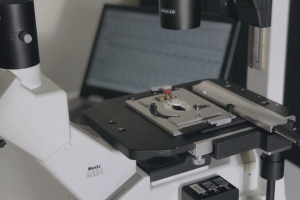
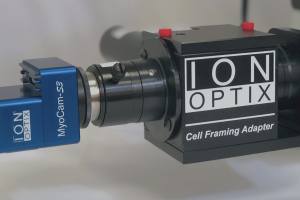
IonOptix CytoMotion is available as a modular software add-on to existing IonOptix data acquisition systems, like our Calcium and Contractility and MultiCell Systems, it is also available as a low-cost CytoMotion Lite standalone system. CytoMotion Lite enables analysis of the following critical parameters:
- Max contraction velocity
- Time to max contraction velocity
- Shortening time (time to peak)
- Max return velocity
- Time to max return velocity
- Relaxation/relengthening time (time to baseline)
- Transient/contraction duration (with optional CytoSolver analysis)
- Beat frequency with variance (with optional CytoSolver analysis)
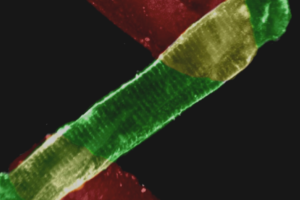
Contact us if you’re interested in measuring contractility dynamics in hESC- and hiPSC-derived cardiomyocytes.
Yi N, Wang HR, Zhu YP, Xiao T, Lin Q, Liu H, Meng YL, Sun YZ, Lin F, Hu SY, Cao HM, Zhang JF, Peng LY, Li L. RNA-binding protein SAMD4A targets FGF2 to regulate cardiomyocyte lineage specification from human embryonic stem cells. Stem Cell Res Ther. 2025 Mar 18;16(1):144. doi: 10.1186/s13287-025-04269-7.