

Go back to RESOURCES
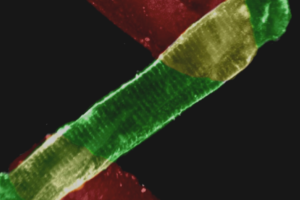
This article, published in Cell Reports, investigates how a specific genetic mutation causes heart disease in a subset of Noonan syndrome patients. The researchers used patient-derived and CRISPR-Cas9-corrected stem cell-derived cardiomyocytes to study a homozygous variant, finding that the mutation alters the binding affinity of dimerization domains, causing LZTR1 proteins to form abnormal linear polymers. This aberrant polymerization leads to LZTR1 dysfunction, a marked increase in RAS GTPase levels, and hypertrophy. Importantly, CRISPR correction of the missense variant on just one allele was sufficient to rescue the disease phenotype, providing proof of concept for a potential therapeutic approach.
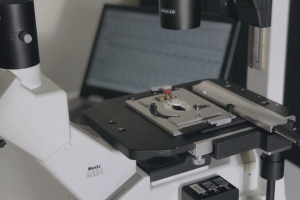
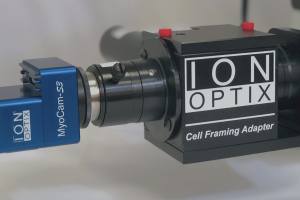
The study used an IonOptix CytoMotion Lite system equipped with CytoSolver analysis to measure the contractile properties of their 2D cardiac monolayer cultures. CytoMotion Lite is low-cost solution offering fast, real-time, non-invasive, non-destructive characterization of contractility kinetics from stem cell-derived cardiomyocytes. Please contact us if you’re interested in performing similar functional measurements in iPSC-CMs in your lab.
Busley AV, Gutiérrez-Gutiérrez Ó, Hammer E, Koitka F, Mirzaiebadizi A, Steinegger M, Pape C, Böhmer L, Schroeder H, Kleinsorge M, Engler M, Cirstea IC, Gremer L, Willbold D, Altmüller J, Marbach F, Hasenfuss G, Zimmermann WH, Ahmadian MR, Wollnik B, Cyganek L. Mutation-induced LZTR1 polymerization provokes cardiac pathology in recessive Noonan syndrome. Cell Rep. 2024 Jul 23;43(7):114448. doi: 10.1016/j.celrep.2024.114448.