

Go back to RESOURCES
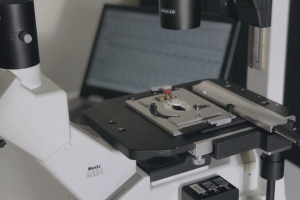
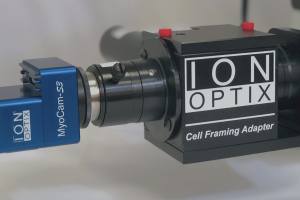
In this Journal of Molecular and Cellular Cardiology Plus publication from researchers at UVM, Hancock et al. demonstrate a novel method utilizing living myocardial slices to model early and late stage diastole using their IonOptix MyoClamp System (formally Cardiac Slice System). The authors offer detailed descriptions of their cardiac slice preparation as well as ex vivo mechanical work loops analogous to cardiac pressure volume loops.
The authors show that the microtubule depolymerizer colchicine reduced diastolic stiffness and accelerated twitch kinetics during isometric twitches. By clamping pre- and afterload force to generate myocardial work loops while applying a delayed stretch during relaxation, they were also able to effectively model all three diastolic phases: isovolumic relaxation, early filling, and late filling due to atrial contraction. In their colchicine-treated slices, they observed increased myocardial work due to faster force development and relaxation kinetics. In particular, they observed enhanced relaxation time and early phase filling performance.
This paper is particularly novel in that it is the first to mimic diastolic physiology, dysfunction, and performance utilizing myocardial slices and myocardial work loops. The living myocardial slice offers a significant advantage over other model systems by preserving the myocardium’s native multicellular and noncellular architecture while avoiding confounding systemic effects often observed in whole heart and whole animal models. If you’re interested in performing similar measurements utilizing living myocardial slices, contact us and let us know.
Hancock EN, Palmer BM, Caporizzo MA (2024). Microtubule destabilization with colchicine increases the work output of myocardial slices. J Mol Cell Cardiol Plus. 2024 Mar;7:100066. doi: 10.1016/j.jmccpl.2024.100066.